- Cost
$750
Dates: 08/07/2026 - 08/09/2026
Times: 9:00am to 5:30pm MT
Deposit: $200 deposit, non-refundable (non-refundable after July 7, 2026)
Payable by check, cash or Zelle.
Make checks out to Bill Smythe and mail to:
Reagan Rieland
2019 Galisteo St, Ste E-1
Santa Fe, NM 87505
Zelle to Bill directly: 505-690-3626
Cash can be dropped off with Reagan.
Contact Reagan at 775-250-8261 or email reagan.rolfer@gmail.com.- Discount
- Early bird price of $700 if paid before July 7, 2026
- CE Credits
- 3 Elective CE Credits
22.5 NCBTMB CEUs
- Location
- Ft. Marcy Hotel and Suites
321 Kearny Ave
Santa Fe, NM
UNITED STATES
Summary
Class Info
Non-DIRI Affiliated courses are offered by non-faculty members who have completed their Advanced Training. Certificates are issued by the member for Elective CE Credit. Inquire with the member regarding NCBTMB approval.
Details
This continuing education course offers licensed massage therapists and bodywork practitioners an opportunity to deepen their clinical effectiveness while working with chronic pain and postural imbalances through Structural Integration and relationally informed somatic practice.
While hands-on approaches such as Rolfing® Structural Integration, Craniosacral Therapy, Visceral Manipulation, Trigger Point Therapy, and Massage are powerful tools, research and clinical experience increasingly show that how we work matters as much as what we do. This course explores the role of practitioner presence, nervous system awareness, affect regulation, and the therapeutic relationship in shaping tissue response, client safety, and sustainable outcomes.
Informed by contemporary trauma-aware principles of safety, pacing, and titration, the course helps practitioners refine their ability to recognize physiological signs of overwhelm and respond skillfully through touch, timing, and relational engagement. Through a balance of lecture, experiential exploration, and supervised practice, participants learn to work with autonomic nervous system responses (fight, flight, and freeze), relational dynamics that naturally arise in hands-on work, and psycho-emotional material as it presents somatically.
Throughout the course, emphasis is placed on ethical scope of practice, practitioner self-regulation, and efficient body mechanics—supporting both client well-being and practitioner longevity. Participants leave with practical tools, increased perceptual clarity, and a more embodied sense of confidence when working deeply and safely with a wide range of clients.
Upon completion of this course, participants will be able to:
- Identify and describe components of the intersubjective (relational) field as they arise during bodywork sessions.
- Demonstrate techniques for maintaining practitioner presence and emotional regulation when working with chronic pain clients.
- Recognize signs of transference and countertransference and apply strategies to manage these dynamics within ethical scope of practice.
- Assess and track autonomic nervous system responses (fight, flight, and freeze) and apply appropriate interventions to support nervous system regulation.
- Apply mobilization techniques for the lower legs to address patterns associated with postural imbalance, developmental arrest, and unresolved trauma.
- Differentiate anatomical and physiological structures requiring engagement to support whole-body structural integration.
- Demonstrate efficient body mechanics to reduce practitioner fatigue and risk of burnout during deep manual therapy.
- Apply strategies to minimize client discomfort while working effectively within deeper tissue structures.
About the Instructor
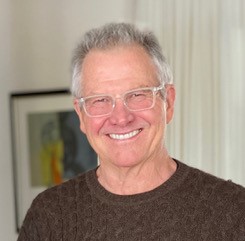
William Smythe, M.A., is a pioneer in Somatic Psychology and Rolfing® Structural Integration with more than four decades of clinical practice and teaching. He has been a practicing Rolfer for over forty years and previously served as a Faculty Member of the Rolf Institute. He holds a master’s degree in Somatic Psychology.Bill was a protégé and early collaborator of Dr. Peter Levine and co-taught with him during the formative years of Somatic Experiencing®. His work is also informed by advanced training in Biodynamic Craniosacral Therapy, including extensive teaching collaboration with Dr. Michael Shea.
Central to Bill’s teaching is the cultivation of presence, perception, and relational attunement within the therapeutic field—qualities deeply shaped by his long-standing practice of Aikido. A 5th-degree black belt, he served as Sensei and director of the Aikido Arts Center in Santa Fe, New Mexico, for a decade. He currently lives in South Florida with his wife, Kelly.
Website: https://williamsmythe.com/